


June 24, 2026 – It is a profound honor and privilege to participate as a Visiting Scholar of the American Cleft Palate Craniofacial Association (ACPA) for 2026. Being selected among candidates from numerous developing countries represents one of the most meaningful academic and professional milestones in my career as a craniofacial orthodontist and cleft care provider from the Kurdistan Region of Iraq.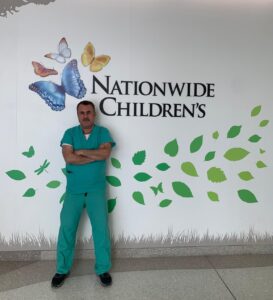
As part of this prestigious scholarship program, I completed a one-month academic observership in the United States, visiting two internationally recognized cleft and craniofacial centers in two children’s hospitals: Nationwide Children’s Hospital in Columbus, Ohio, and Children’s Hospital of Orange County (CHOC) in California, where I spent two weeks at each institution.
Upon arrival at Nationwide Children’s Hospital, Ms. Amanda Smith, the Cleft Team Coordinator, extended a professional welcome to me. She led a comprehensive orientation tour of the clinical facilities, highlighting the interdisciplinary nature of the craniofacial department. The tour is designed to provide an overview of the hospital’s integrated care model before concluding at the Orthodontic Treatment Program, where the specific clinical workflows and specialized patient care protocols will be introduced.
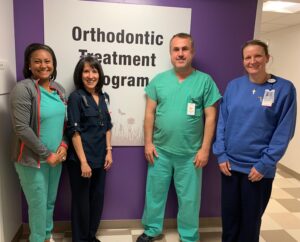 At Nationwide Children’s Hospital, I had the distinct privilege of collaborating with an exceptional craniofacial orthodontic team, including Dr. Ana Mercado, Dr. Kaitrin Kramer, and Dr. Kara Morris. During my rotation at the Cleft Lip and Palate Center and Center for Complex Craniofacial Anomalies, I was immersed in a highly advanced multidisciplinary environment that exemplified excellence in cleft and craniofacial care. Observing their comprehensive approach to presurgical infant orthopedics, orthodontic preparation for alveolar bone grafting, and long-term skeletal management provided me with invaluable clinical and academic insights. The integration of advanced technologies, evidence-based protocols, and coordinated interdisciplinary care at Nationwide Children’s has profoundly influenced my vision for elevating cleft and craniofacial services in Iraq and will serve as a foundation for the future development of our clinical protocols.
During my clinical observership, I also had the honor of working closely with Dr. Andrew Linkugel, an accomplished craniofacial surgeon whose mentorship significantly enriched my understanding of modern surgical planning. Under his guidance, I gained advanced exposure to Three-Dimensional Virtual Surgical Planning (3D-VSP) for both complex cleft-related orthognathic procedures and conventional orthognathic surgery. This experience provided me with in-depth knowledge of contemporary digital workflows, precision-guided surgical planning, and the integration of virtual technologies to optimize surgical accuracy and patient outcomes.
In the 3D Printing Laboratory, under the supervision of Dr. Jay, I developed advanced competency in the digital design and fabrication of sophisticated dental and medical models for craniofacial applications. My training focused extensively on the digital reconstruction of craniofacial anatomy, including the skull and complex orofacial structures associated with cleft and craniofacial anomalies. Through the use of specialized software and high-precision 3D-printing technologies, I gained hands-on experience in producing patient-specific anatomical models for diagnosis, surgical planning, and interdisciplinary treatment coordination. This experience significantly expanded my understanding of advanced digital dentistry and medical modeling technologies uses in cleft lip, palate and craniofacial anomalies, and represented one of the most impactful aspects of my training at Nationwide Children’s.
My educational experience extended well beyond orthodontics. I spent considerable time in the Velopharyngeal Disorders Clinic, where I observed comprehensive evaluations sessions conducted by Dr. Kirschner and Dr. Baylis. These experiences provided me with valuable insight into the multidisciplinary management of velopharyngeal dysfunction and speech-related challenges in patients with cleft and craniofacial conditions.
My rotation in the specialized feeding clinic with NP Azure was equally transformative. Observing the implementation of specialized feeding systems and supportive care strategies for infants with cleft lip and palate highlighted the critical importance of early nutritional intervention and family-centered care. The advanced level of coordination and support provided within this clinic inspired me to advocate for the establishment and formal integration of similar feeding-support services within our healthcare infrastructure in Iraq.
I also observed clinical speech therapy sessions led by Ms. Ruchi Koirala, focusing on evidence-based therapeutic approaches for patients with cleft lip and palate. These sessions enhanced my understanding of advanced scientific methodologies used to address speech-sound disorders, resonance abnormalities, and compensatory articulatory patterns associated with craniofacial anomalies.
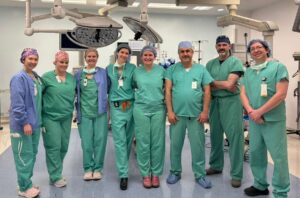 One of the most inspiring moments of my visit was meeting Professor Dr. Richard Kirschner, Pediatric Craniofacial Plastic Surgeon and Craniofacial Team Director. Dr. Kirschner generously shared his extensive expertise and allowed me to observe multiple cleft lip and palate surgeries, as well as alveolar bone grafting procedures.
Additionally, I participated in a clinical observership with Dr. Pearson at the A5 Vascular Clinic, where I gained exposure to advanced vascular diagnostics, interdisciplinary patient evaluation, and specialized management protocols for complex vascular anomalies.
In addition, I attended weekly multidisciplinary cleft and craniofacial conferences involving orthodontists, craniofacial surgeons, speech pathologists, feeding specialists, audiologists, social workers, psychologists, and other healthcare professionals. These meetings highlighted the critical importance of comprehensive team-based care in the management of patients with complex craniofacial anomalies.
I was also honored to deliver a one-hour academic presentation at Nationwide Children’s Hospital discussing the history, current challenges, and future needs of cleft and craniofacial care in Iraq and the Kurdistan Region. Following the presentation, I had a valuable discussion with Ms. Amanda Smith, Cleft Team Coordinator, regarding opportunities for future academic collaboration and professional partnerships between U.S. cleft teams and our center in Iraq to improve patient care, education, and multidisciplinary services in our region.
One of the most memorable highlights of my time in Ohio was the opportunity to meet Dr. Ching-Chang Ko. As Chair of the Graduate Orthodontics Program at The Ohio State University College of Dentistry, Dr. Ko generously shared his extensive academic and clinical expertise during our discussions. He also personally guided me through the orthodontic clinics, research laboratories, and educational facilities within the department, providing valuable insight into the institution’s outstanding commitment to innovation, education, and excellence in orthodontic training and research.
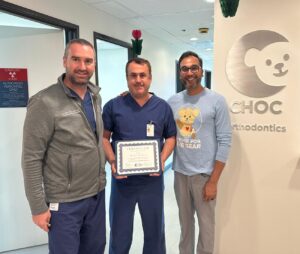 During the second phase of my visiting scholarship, I joined the cleft and craniofacial team at CHOC Hospital in Orange County, California, under the supervision of Professor Dr. Raj Vyas, Pediatric Craniofacial Plastic Surgeon and Cleft Team Director. I observed numerous multidisciplinary clinic cases and surgical procedures, including cleft lip and palate repair surgeries and alveolar bone grafting operations.
It was a privilege to participate in the clinical observations at the Plastics Clinic, particularly under the guidance of Dr. Vyas. These weekly sessions provide an invaluable opportunity to witness the longitudinal care of patients with complex cleft and craniofacial anomalies.
The clinical experience encompasses the critical transition from preoperative planning—where the surgical strategy is meticulously mapped—to the postoperative phase, which focuses on functional recovery and aesthetic refinement.
Participating in the interdisciplinary Craniofacial Clinic meetings provides a comprehensive view of how a specialized cleft team collaborates to manage complex cases. These sessions serve as the intellectual hub of patient care, where surgeons, orthodontists, speech pathologists, and other specialists synchronize their expertise.
During these meetings, the discussion of various cleft and craniofacial anomalies typically follows a structured, patient-centered approach.
I also spent significant time in the orthodontic clinic with craniofacial orthodontist Dr. Douglas Olson, where I observed both cleft-related and conventional orthodontic cases. Dr. Olson generously shared his expertise and treatment approaches for cleft patients, including Nasoalveolar Molding (NAM) therapy for infants with cleft lip and palate.
Another highly valuable component of my CHOC experience was meeting with Ms. Sharon Vargas, Cleft Team Coordinator, who provided extensive educational resources regarding infant feeding and demonstrated specialized feeding systems for babies with cleft conditions. Since dedicated cleft feeding services and specialized feeding nurses are currently unavailable in Iraq, this experience emphasized the urgent importance of developing parent education programs and feeding support services for cleft infants in our country.
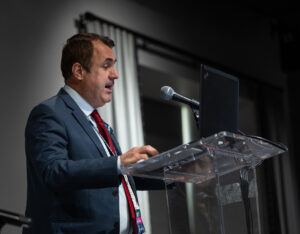 Following my hospital observership, I attended the 2026 ACPA Annual Meeting in Boston from March 24–28, where I had the honor of delivering a scientific presentation discussing the history of cleft care in Iraq and sharing my experience as an ACPA Visiting Scholar. I am proud to represent Iraq and the Kurdistan Region as the first and only ACPA Visiting Scholar’s cleft care provider and orthodontist from my country and region to date.
The ACPA Annual Meeting was an extraordinary educational and professional experience. I attended numerous lectures presented by internationally recognized craniofacial orthodontists and cleft care specialists and actively participated in scientific discussions. I also had the opportunity to connect with professionals from across the United States, including craniofacial orthodontists, pediatric craniofacial plastic surgeons, speech pathologists, maxillofacial surgeons, feeding specialists, audiologists, social workers, and multidisciplinary cleft care providers. These interactions provided invaluable insight into contemporary approaches to cleft and craniofacial management.
Meeting with the Mayo Clinic team during the ACPA Annual Meeting in Boston represents a significant opportunity for high-level professional exchange. Engaging with specialists from such a renowned institution allows for a deep dive into the “Mayo Model” of integrated care, which is characterized by its highly coordinated, multispecialty approach.
I am deeply honored that the President of ACPA, Dr. Steven Goudy, presented me with an ACPA plaque in recognition of my participation in this prestigious program and my scientific contribution during the annual meeting.
During the exhibition sessions, I also met representatives from several international cleft and humanitarian organizations, including Global Smile Foundation, MYFACE, Children’s Craniofacial Association, and Smile Train. We discussed opportunities for future collaboration and support for patients with complex cleft and craniofacial anomalies in Iraq. In addition, I connected with several companies specializing in cleft, craniofacial, and maxillofacial products and surgical technologies to explore future possibilities for improving access to specialized materials and equipment for our patients.
The most significant lesson I am taking home is the vital importance of the Multidisciplinary Team (MDT) approach. During the meeting and my hospital visits, I engaged with:
- Surgeons: Pediatric plastic and maxillofacial specialists.
- Rehabilitative Experts: Speech-language pathologists and audiologists.
- Support Staff: Cleft feeding nurses, social workers, and care coordinators.
Seeing these professionals work not as individuals, but as a single unit dedicated to the “whole child,” has redefined my vision for treatment in Kurdistan. The level of advancement in managing craniofacial anomalies in the U.S. serves as a powerful blueprint for what we can achieve through structured, collaborative care.
During one of the most difficult and uncertain periods of my life, I was deeply touched by the extraordinary kindness, compassion, and support shown to me by the leadership and staff of ACPA. Exactly after one weeks from my traveling to USA an at a time when a major war had erupted in the Middle East near my country, the situation created tremendous challenges, fear, and uncertainty regarding travel and personal safety. Being away from home during such a crisis was emotionally and professionally overwhelming. However, in the midst of these difficult circumstances, I experienced genuine humanity, generosity, and care from remarkable individuals who stood beside me and ensured my safety and well-being.
I would like to express my deepest gratitude and sincere appreciation to Dr. Steven Goudy, whose leadership, compassion, and personal concern gave me reassurance and hope during this challenging period. I am equally grateful to Adam Levy, Executive Director of ACPA, for his continuous support, understanding, and efforts to help me navigate this very difficult situation with dignity and security.
My heartfelt appreciation also goes to Erin Brenneman, Manager of Member Programs & Engagement at ACPA, whose kindness, communication, and thoughtful assistance made an enormous difference throughout my extended stay in the United States. From the very beginning of my nomination for this prestigious and life-changing program, throughout my preparation before traveling to the United States, during my entire stay in America, and until the moment I safely returned to my country in the Kurdistan Region of Iraq, Erin and Kim Howard (Global Event Managers) stood beside me with unwavering support, guidance, compassion, and professionalism. As an international visiting scholar coming from a region facing many challenges, this journey was not simply international travel for advanced professional training; it was a long and demanding personal and professional journey filled with responsibilities, uncertainties, emotional challenges, and historic regional instability due to the war in the Middle East near my country. Despite all of these circumstances, Erin and Kim continuously ensured that I never felt alone during any stage of this experience. Erin Brenneman demonstrated exceptional professionalism, leadership, kindness, and sincere care throughout every detail of this journey. Her constant communication, encouragement, patience, and willingness to help created a sense of reassurance and confidence that extended far beyond administrative responsibilities. She treated me not merely as a scholar visiting from another country, but as a valued member of the ACPA family. Likewise, Kim Howard played an extraordinary role in coordinating, supporting, and guiding me throughout this long journey. Her compassion, understanding, and dedication were deeply meaningful to me, especially during moments of uncertainty and difficulty. Her support reflected genuine humanity and kindness that I will always remember with profound gratitude. As a craniofacial orthodontist and representative of the Kurdistan Region of Iraq, I will forever carry deep respect, admiration, and gratitude for Erin and Kim. Their support has left a lasting impact on both my professional career and my personal life. Words alone cannot fully express how thankful I am for everything they have done for me. Their generosity, compassion, and professionalism represent the very highest values of ACPA and the global craniofacial community.
This remarkable experience has profoundly strengthened my commitment to advancing cleft and craniofacial care in Iraq and the Kurdistan Region. I extend my sincere gratitude to ACPA for selecting me for the prestigious 2026 Visiting Scholar Program. I also express my deepest appreciation to Nationwide Children’s Hospital, CHOC Hospital, and all the mentors, coordinators, surgeons, orthodontists, nurses and healthcare professionals who generously welcomed me and shared their expertise throughout this unforgettable academic journey.
Dr. Zana Hussein Aziz
BDS, MSc, FICD
Consultant Orthodontist
ACPA Visiting Scholar 2026
International Member, American Cleft Palate-Craniofacial Association
Member, American Association of Orthodontists
Fellow, International College of Dentists
Section Chair of the Kurdistan Region of Iraq – Pierre Fauchard Academy
Sulaimaniyah, Kurdistan Region of Iraq